Search Results
76 results found with an empty search
- Two Felicias: A Story of Jimmy Green
Sgt. Green, Air Force veteran who served during the Vietnam War, needed help, so reached out to VOAWW.
- 10 Months of Silence
“When I tell you things, I need you to not disclose them to Dad, who will tell my brother.” Things had begun breaking down between Jen and her parents even before 2017, when her brother came up to visit. They’d never spoken about his mental illness in her family – always pretended it wasn’t there – but on that visit, it was so clear to Jen. A couple months later, she learned that he was getting a divorce, and the next year their parents let him move into the family lake house. Jen and her family visited two summers ago, but that was the last time they were all together. Jen knew she needed to put up boundaries, to make sure she and her kids were safe. But her parents wouldn’t hear it, wouldn’t acknowledge anything wrong with her older brother. Jen needed a break from the calls and emails that went nowhere, from her father’s anger. So last winter, she stopped communication, laying down her own boundaries with her parents. She meant the pause to apply only for herself, but her mom took it to mean something bigger, more jarring: no contact with the grandkids, no calls, no facetime, no e-mails. No visits. It was Jen’s mom who suggested mediation. So, after almost a year without speaking, Jen saw her mom for the first time on Zoom, along with two VOA mediators, across states and time zones, connecting in a way they never thought they’d need. “The mediators were both very kind, very clear, and really good communicators. They both followed the process and kept bringing us back to it.” Jen felt heard for the first time: about her brother, about her Mom’s pattern of breaching her confidence. Her Mom felt heard, about the pain Jen had caused, about not seeing her grandson and granddaughter. The mediators didn’t dwell in the past, but focused on the process, helping Jen and her mom craft an agreement about how they would communicate going forward. “When there are family patterns that aren’t very healthy, having that process to help keep things moving forward was so helpful” says Jen. They didn’t solve everything. But, Jen and her Mom are talking and e-mailing again, and Jen’s kids are talking to Grandma again. “I’m really grateful,” says Jen . To learn more about how mediation or conciliation might help you, visit voaww.org/drc. All identifying information in this story has been changed to protect the privacy of the individuals involved.
- Disability Services Spotlight: Ron Peters
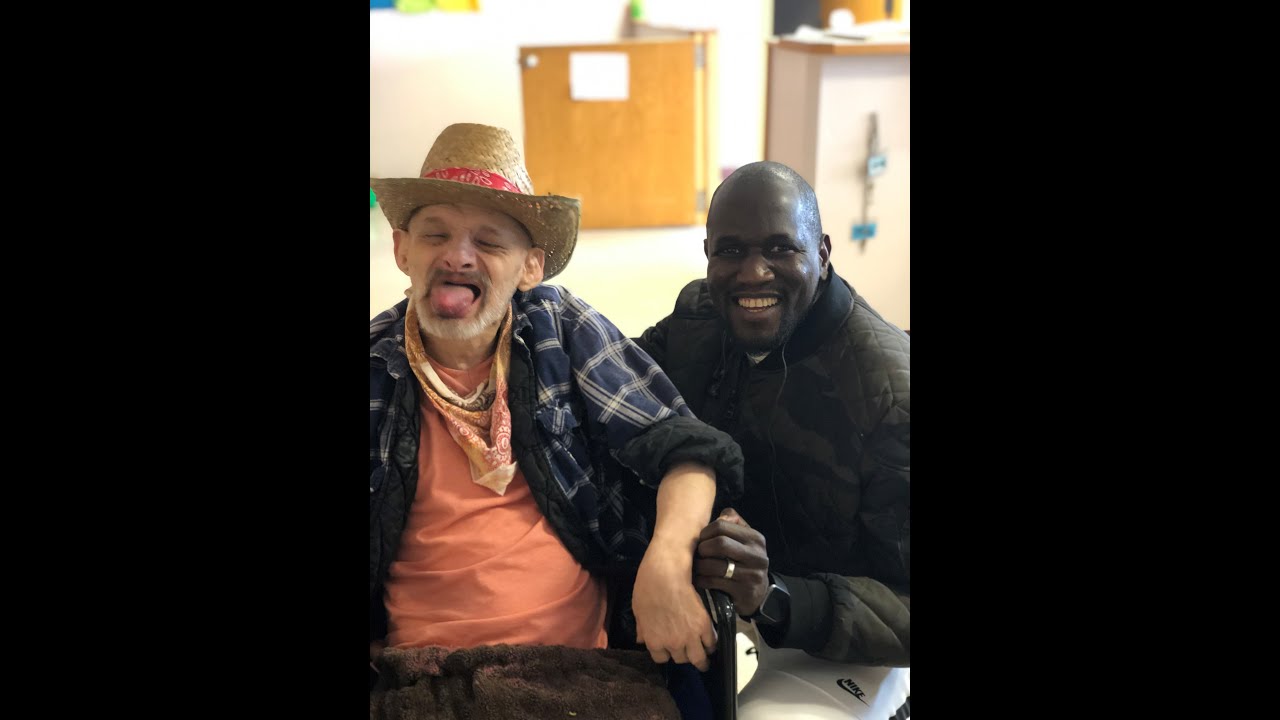
Ron Peters, a member of VOA's Disability Services family since 2003, shows his love of fun and adventure.
- Growing with John Peace: A Disability Services Story
This is the story of a remarkable, three-agency partnership that led to John Peace working at the King County Greenhouse for over 32 years. Born deaf and autistic, John has found purpose in his work, and those affected by John have gained compassion and understanding.
- Audrey Beastrom: The Climb
You could be having a bad day, and you walk in and see Rhonda (pictured above) and she just makes you feel so good. She's so happy and wants a big hug. Rhonda is great. She loves to do puzzles, and she's got a memory like a xerox machine for names and dogs. She loves music, dancing, and sweeping. I was able to help her get into a more affordable housing situation, so she's been able to go on trips to Portland and Chelan, and buy a few beautiful things for her bedroom. ----- Back in Bismarck, North Dakota, my six brothers and sisters and me would ride our bikes to Hillside public swimming pool: Clyde, Larry, Gloria, Me, Pam, Keith and Vicki. Lessons in the morning, then back again for open-swim in the afternoon, sometimes from 1pm all the way to 8. We’d listen for the bells of that ice cream truck’s song, and if Mom had some extra cash, we’d run out when it rolled by. Winter meant sledding in our neighborhood or at Hillside Park and ice fishing on Sweet Briar Lake. Catching up to 12 perch through ice over 16” thick, which Dad would fillet and pan fry that night. I remember seeing my neighbor Linda, about a year younger and with a disability, get teased and bullied by other kids. So, I start walking those six blocks to Richolt Elementary and back with Linda. Sundays were always church at Faith Lutheran, then my Dad’s chicken noodle soup. Every Sunday. In high school, we had a chance to volunteer, and I chose to work with special needs kids. I got to take them swimming. I really enjoyed it. It made me feel good. I started working in support services with Pride in North Dakota, then another company. Marjorie was a client in Bismarck who I just adored. She called me “Daughter,” and we went on trips and vacations. She passed from cancer a number of years ago. In this work, you get really close to people, and sometimes you lose them. ----- I moved to Washington in 2004, started as a DSP (Direct Support Professional) with VOA, then I became a Lead and then a Manager. I have about 14-23 DSPs I support, and five sites with nine clients: Quilceda, two apartments in Marysville, Green House, and an Everett place. When I walk into a site and the clients want to give me the biggest hug and biggest smile, that gives me meaning. I’m a hugger. And, you know, in this job, you enrich people’s lives. You make their dreams come true. I was with our client Deanna at her Westover apartment in Marysville. She was listening to a song, and she just started singing. She was singing every word. I think it was Miley Cyrus’ “The Climb,” and I told her, “You sing beautifully.” She can be really shy, but she really does sing beautifully. As much as VOA enriches client lives, it has also enriched my life. The people here are just wonderful.
- Caring For Those Who Care For Others
By Brenda Werth, Senior Director of Disability Services Volunteers of America Western Washington When I started as a Direct Support Professional (DSP) 15 years ago with VOA, I was given the opportunity to work with clients who had disabilities, and completely fell in love with it. And, there’s no way I could’ve survived on the salary on my own. I lived with roommates at the time to make ends meet. And many of the 220 DSPs here at VOA live with roommates, have more than one job, or switch off shifts with their spouse so that one can take care of kids. March is Developmental Disabilities Awareness month, and it’s important that we take time to shine a light on the low wages in the Supported Living field, which leads to high levels of turnover and in our team of professional who care for those with intellectual and developmental disabilities. As Senior Director of the VOAWW’s Disability Services department, I see the cost of turnover every day. We serve 74 adults with disabilities in 35 homes throughout King, Snohomish and Skagit counties, fostering independence, building relationships and enhancing self-esteem to help our clients live meaningful lives. We work hard to empower and retain our staff, but still lose about a third each year. We track better than the Washington State average, where our colleagues in the field of Supported Living over lose over half their staff annually. According to the Community Residential Services Association (CRSA), which advocates for people with disabilities, “Providers are losing valued employees to Home Care, State Operated programs and fast food and other industries that can pay a livable wage. Funding is needed to address the staffing crisis in Supported Living and take steps to stabilize this vital community resource.” As the minimum wage has risen, State funding for DSPs hasn’t kept pace. Here at VOA, our average DSPs in Snohomish and Skagit Counties make $15.50 an hour. For full-time DSPs, this generates a gross annual salary of $32,240. For comparison, the 2020 ALICE Report (Asset Limited, Income Constrained, Employed) commissioned by United Way found that a family of four must earn a minimum of $72,600 to afford basic living expenses in Washington State. The math just doesn’t work. If we care about all members of our community and seek to provide fulfilling lives to those who need us the most, we must increase the funding for Supported Living professionals. To help us reduce turnover and take better care of our clients, contact your State Legislator and ask that they support CRSA’s 2020 Supplemental Budget Request, which asks for a 5.4% Vendor Rate increase to stay ahead of the minimum wage increase in January 2021 and comply with the new state overtime salary threshold. Here at VOA, 100% of the funding for our Direct Support Professional team comes from our State contract. During this legislative session, please help us take care of those who care for others.
- 27 Years of Conflict
“A lot of conflict is just misunderstanding. Through mediation, they learn that the other person is not Satan incarnate, but somebody with their own perspective.” Paul Ferrari knows something about conflict. Born in Kincaid, Illinois (population 1,533), Paul’s father was a coal miner and his mother served as a nurse. Paul and his wife settled in the Seattle area in 1980 after 14 years in St. Louis. In 1993 he began volunteering at VOA’s crisis line, when the manager brought up a mediation opportunity. After over 27 years of volunteering, Paul is VOA’s longest-serving volunteer Mediator, having worked to resolve hundreds of conflicts in Small Claims Court and between landlords and tenants, divorcing parents, and warring neighbors. “They come in screaming at each other, or certainly very angry. And, they leave with a settlement they can live with.” Paul remembers his very first mediation, between a landlord and a tenant who couldn’t pay his rent but also couldn’t afford to move. They worked out an agreement where the tenant would work off the hours, and Paul was hooked. “It’s totally involving. There’s no time for distractions, because you have to be completely present.” One of his favorite mediations involved furious former business partners. “They came in calling each other crooks and how ‘he should be in jail.’ They left with plans to have dinner in a couple nights and talking about a new business venture.” Thank you to Paul and each of our dedicated Mediators. The world is a more peaceful place because of your work. - - - - - Paul’s story is one piece of our 2021 Volunteer Appreciation campaign. To learn more or discover how you can give back, visit: voaww.org/volunteer .
- Who is Olivia Tsang?
Speaking with Olivia Tsang, I get the feeling that she has found something on Casino Road. After time in Indiana and California, her family settled in Kirkland. But she is not Eastside Olivia. She has degrees in Religion and East Asian Studies from Oberlin in Ohio, but she’s not Midwest Olivia, Academic Olivia nor Reverend Olivia. She taught English in Japan for a year and a half before the pandemic brought her home: mostly middle schoolers, and it was hard and rewarding in the way that sharpens a person. But she is not, at least for now, Teacher Olivia. Her kickboxing dreams are on hold because of Covid-19, and she has no fights scheduled. She is not Warrior Olivia. So who is Olivia Tsang? “Olivia is an amazing volunteer. Dedicated, organized, dependable. She could easily run the Pantry operation on Tuesdays,” says VOA Project Manager Dave Jordan. When she returned from Japan because of the Coronavirus last Spring, “I wanted to help,” she says. “I love the people here and the volunteers. The spirit and the community.” Olivia volunteers every Tuesday at VOA’s Casino Road Food Pantry. On the day I'm visiting, they gave food to 163 households representing 756 individuals. Olivia credits Dave with creating community at the Pantry. “He makes everyone feel welcome. He sees us, you know?” At least for now, one day a week, she is Volunteer Olivia. And during this uncertain time, that is enough. - - - - - Olivia’s story is one part of our 2021 Volunteer Appreciation campaign. To learn more or discover how you can give back, visit: voaww.org/volunteer .
- From Toledo to Vietnam: Steve Kennedy's Gifts
Steve Kennedy has seen the cost of addiction. He saw it when he was 13 years old, growing up in Toledo, Ohio in an Irish Catholic family. His father was a successful tax attorney, and there’s a good chance his clients never knew he was a high-functioning alcoholic. His dad died at just 49 years old from complications related to his disease, leaving his mom to take care of Brian, Eileen, Jane, Mary, Steve and his younger sister, Claire. He saw it four years ago, when a man knocked on his car window while Steve was waiting for his Thai food in Lynnwood. The man started by asking for directions to I-5, then showed Steve the gun, asked for Steve’s money and phone. The man seemed desperate, anxious. An addict. Police never found him. - - - - Steve Kennedy has also seen the joy of generosity. After his father died, an anonymous donor – identified later as one of his dad’s wealthy clients – pledged to pay for college for all six Kennedy kids, and so he did. Every year when Steve was at the University of Virginia in Charlottesville, his mom would make him write a letter to their benefactor about his experiences: his classes and career interests. His gratitude. After Steve married Aimee Do, whose family immigrated to the US from Vietnam when she was 11, they decided to give back, to help Vietnamese kids pay for school. It started with their own private donations, but has now grown to the Vietnam Education Fund, a 501(c)(3) that funds all levels of education for kids in Vietnam. They’ve added a milk program, to help children get proper nutrition. - - - - Steve Kennedy has seen the problems and decided to act. Steve has served on the Board of Directors of Volunteers of America Western Washington for over three years, and volunteered at food drive-through sites in Lynnwood and the Everett Mall. He’s partially retired after a successful career as a civil attorney, and his two girls are now in their twenties. “When you’re fortunate and doing well, you have an obligation to give back.” “This is my community. And I think it’s important that we look after our fellow citizens who are struggling or disadvantaged in some way. Whether it’s homelessness, food insecurity, or mental illness, I want to see people thrive and succeed.” For those who consider volunteering, Steve shares, “ '' I think I get more out of it than I put into it. It’s been a real privilege. You’re doing something good for other people, and that’s it’s own reward. You feel like you’re making a difference.” - - - - - Steve’s story is one part of our 2021 Volunteer Appreciation campaign. To learn more or discover how you can give back, visit: voaww.org/volunteer .
- Ham and Cheese Online
“As a kid, I would bring extra ham and cheese sandwiches to school for the kids who didn’t have lunch. I was that kid who would notice, would go up to someone and say, ‘Seems like you’re having a bad day. Want to talk about it?’” Sam’s Dad is retired Army Infantry, and her Mom served in the Army as a medic. As an only child, Sam went to school in Washington, then Texas, then back to Washington for middle and high school in Arlington, where she brought the sandwiches. “My parents are rough-and-tumble kind of people. Sharing emotions wasn’t a thing in our family.” Sam cut her own path, and today VOA recognizes her as an outstanding Crisis Chat volunteer, connecting with teens and adults through imhurting.org . There’s a reason that -- at 19 years old and already graduated from Western Washington University -- Sam can connect with those who are lost, alone, and stressed. As a teen, Sam was driven: 10 years playing the oboe, Wind Ensemble at Arlington High, academic letter all four years, and two years of Running Start classes to get a jumpstart on college. “I remember being this kid, and my Dad thought that everything was fine with me. She’s in band, she gets straight As, she’s going to Running Start. But I was severely depressed and really lonely.” Human Anatomy took her down. “I pushed myself really hard. I wasn’t sleeping. I was staying up for 48 hours or three days straight. I was so concerned that if I failed a test, I would fail the class and get an F on my transcript. I wouldn’t eat. I passed out twice. I was starting to crash and burn.” Her mom was stationed in Hawaii or Tennessee during those months. But someone noticed. Her aunt could tell something was wrong and encouraged Sam to go to therapy. Sam walked into a therapist’s office for the first time at 16 years old, the kid who was always taking care of other people. Three years later, Sam volunteers for VOA two nights a week, answering Chats from teens and young adults who feel lost, like she once did. “I’m not too far removed. I really can relate: you’re doing everything you can and it’s still not enough, and you can’t talk to anyone.” Thanks to our clinicians and volunteers like Sam, VOA responded to over 12,300 crisis chats last year. “Volunteering at Crisis Chat is such a great experience. It’s so wonderful being in an environment where my perspective was valued because I was young. I would love to do this as my full time job.” - - - Sam’s story is one part of our 2021 Volunteer Appreciation campaign. To learn more or discover how you can give back, visit: voaww.org/volunteer .